Bridge relay
A Tor bridge is a Tor entry relay whose address is not published in the public relay list, so networks that block the known Tor relays cannot easily block it.
Explanation
In depth
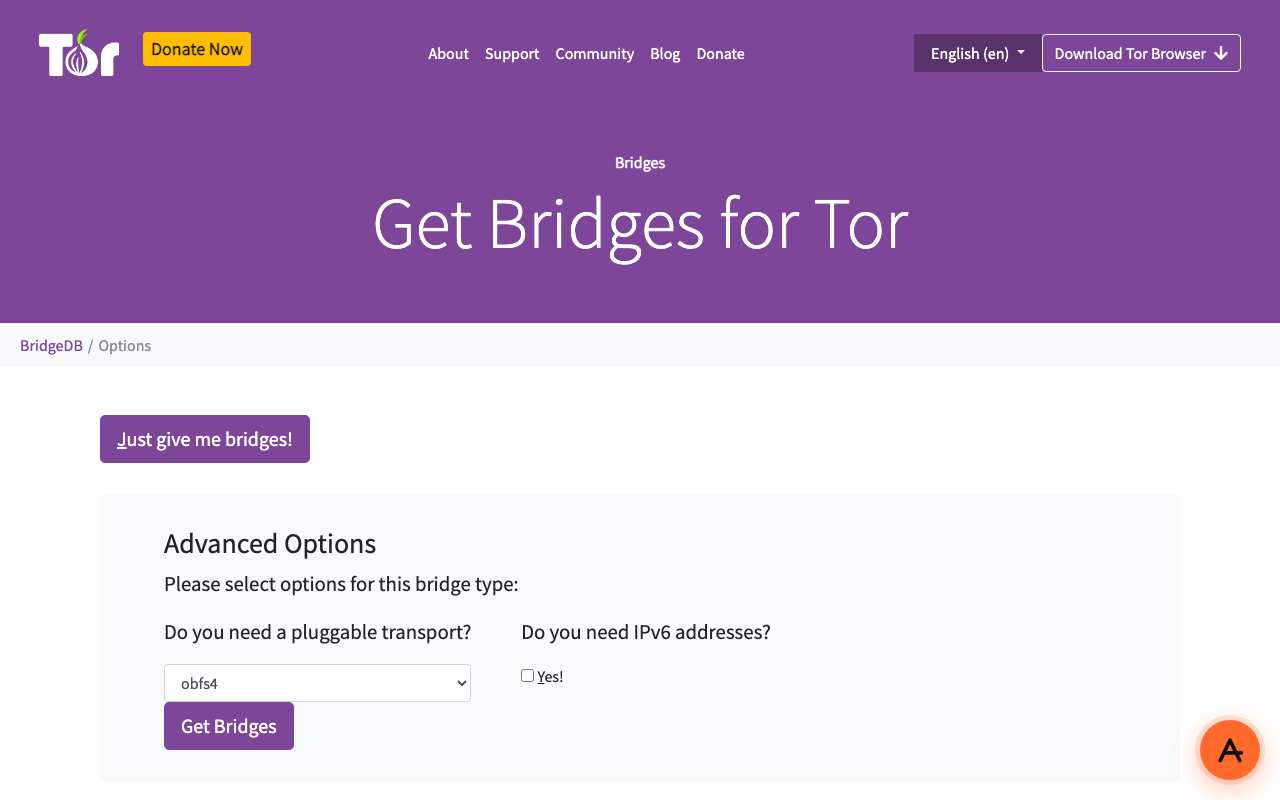
Ordinary Tor relays are listed publicly, which makes them easy for a national firewall to block one by one. Bridges are entry relays kept out of that list and handed out a few at a time, so a censor has to discover them before blocking them. The Tor Project distributes them through its BridgeDB website, by email, through Telegram, and directly inside Tor Browser, which can request new bridges for you. Bridges are usually paired with a pluggable transport that changes how the traffic looks: obfs4 makes it look like random bytes, Snowflake hides it among short-lived volunteer browsers using WebRTC, and meek relays it through a large cloud service. We opened the bridge request page, bridges.torproject.org, through AnyProxy's Singapore region: it loaded with obfs4 selected as the default transport and an IPv6 option. Requesting bridges needs a CAPTCHA, which we did not attempt, and the bridge lines only work in Tor Browser, not inside a web proxy. So a web proxy can help you reach the page that gives out bridges if that page is blocked on your network; it cannot act as a bridge itself.
In practice
Bridge relay in the real world
Bridges are Tor relays that are not listed publicly, so a censor cannot simply block every known relay address. They are usually combined with pluggable transports: obfs4 makes traffic look random, and Snowflake routes it through short-lived volunteer browsers using WebRTC. Tor Browser includes built-in bridges and can request new ones when the built-in ones are blocked.
Sources: Tor Browser manual - bridges · Tor Project - BridgeDB
We checked
Getting to the bridge request page
Questions about Bridge relay
Related terms