Roskomnadzor
Roskomnadzor is Russia's federal regulator for communications and media; it keeps the register of banned websites that Russian internet providers must block.
Explanation
In depth
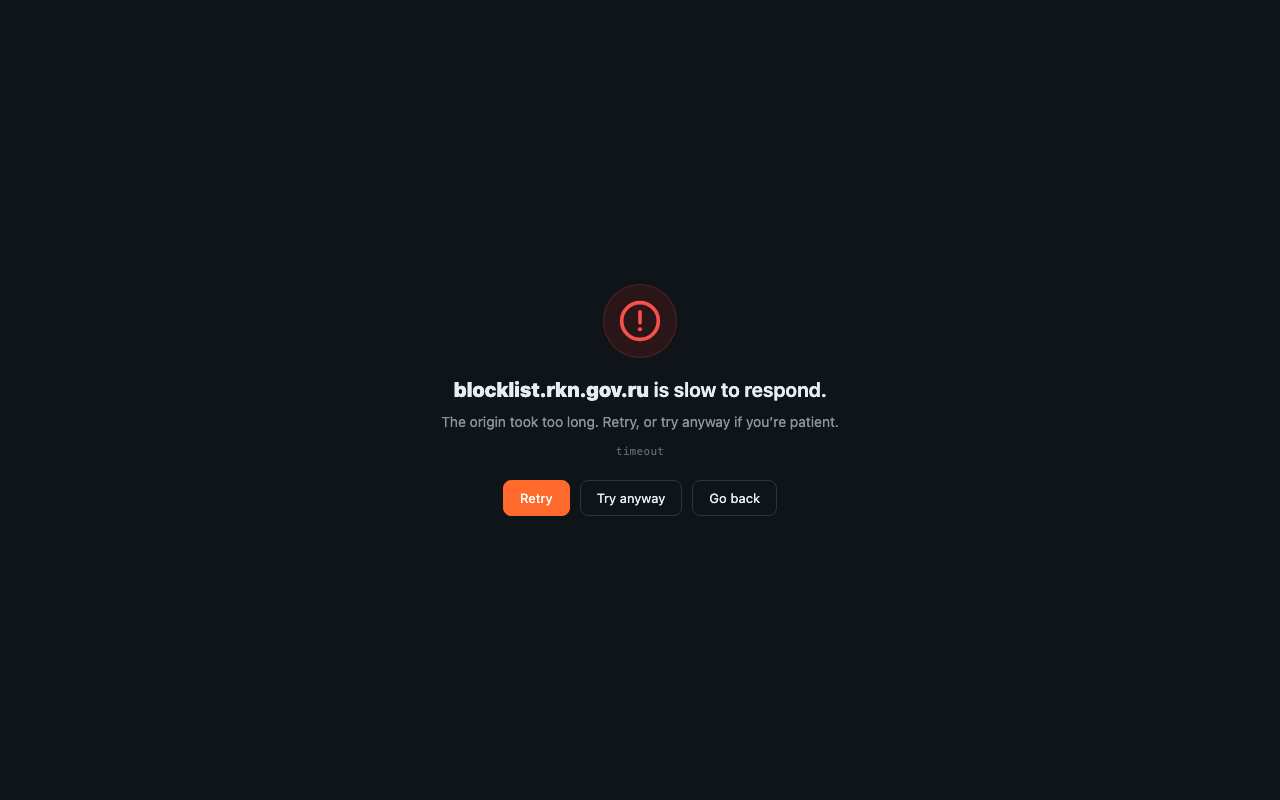
Its full name is the Federal Service for Supervision of Communications, Information Technology and Mass Media. Sites on its register must be made unreachable by Russian ISPs. Its record shows both the reach and the cost of blocking. On 16 April 2018 it ordered ISPs to block Telegram. When Telegram moved onto Amazon and Google cloud addresses, Roskomnadzor blocked those as well; Meduza reported that its blacklist reached about 20 million IP addresses on 17 April, and unrelated websites and apps failed across Russia. Telegram stayed usable for many people, and Roskomnadzor lifted the block on 18 June 2020. In March 2022 it blocked Instagram. More recent measures target features instead of whole services: on 13 August 2025 it said it was partially limiting voice calls on WhatsApp and Telegram, citing fraud and extortion. Its own register lookup, blocklist.rkn.gov.ru, did not answer our requests from outside Russia on 15 October 2026. Using circumvention tools in Russia carries legal risk; check current law before relying on one.
In practice
Roskomnadzor in the real world
The Telegram episode is the clearest public example of IP blocking going wrong: millions of cloud addresses shared with other companies were blocked to stop one app, and the app kept working. For people outside Russia the regulator is hard to observe directly. On 15 October 2026 blocklist.rkn.gov.ru timed out through AnyProxy's Frankfurt server and from our own non-proxy connection; we could not tell whether it filters foreign visitors or was simply down.
Sources: Meduza - Russia's censor blocks millions of IP addresses chasing Telegram (17 Apr 2018) · Meduza - Russia unblocks Telegram (18 Jun 2020) · TechCrunch - Instagram is now blocked in Russia (14 Mar 2022) · Zona - Russia partially limits WhatsApp and Telegram calls (13 Aug 2025)
We checked
Roskomnadzor's register, opened from outside Russia (15 Oct 2026)
Questions about Roskomnadzor
Related terms