Tor
Tor is a free network and browser that sends your traffic through three volunteer-run relays, each adding a layer of encryption, so no single relay knows both who you are and what you are visiting.
Explanation
In depth
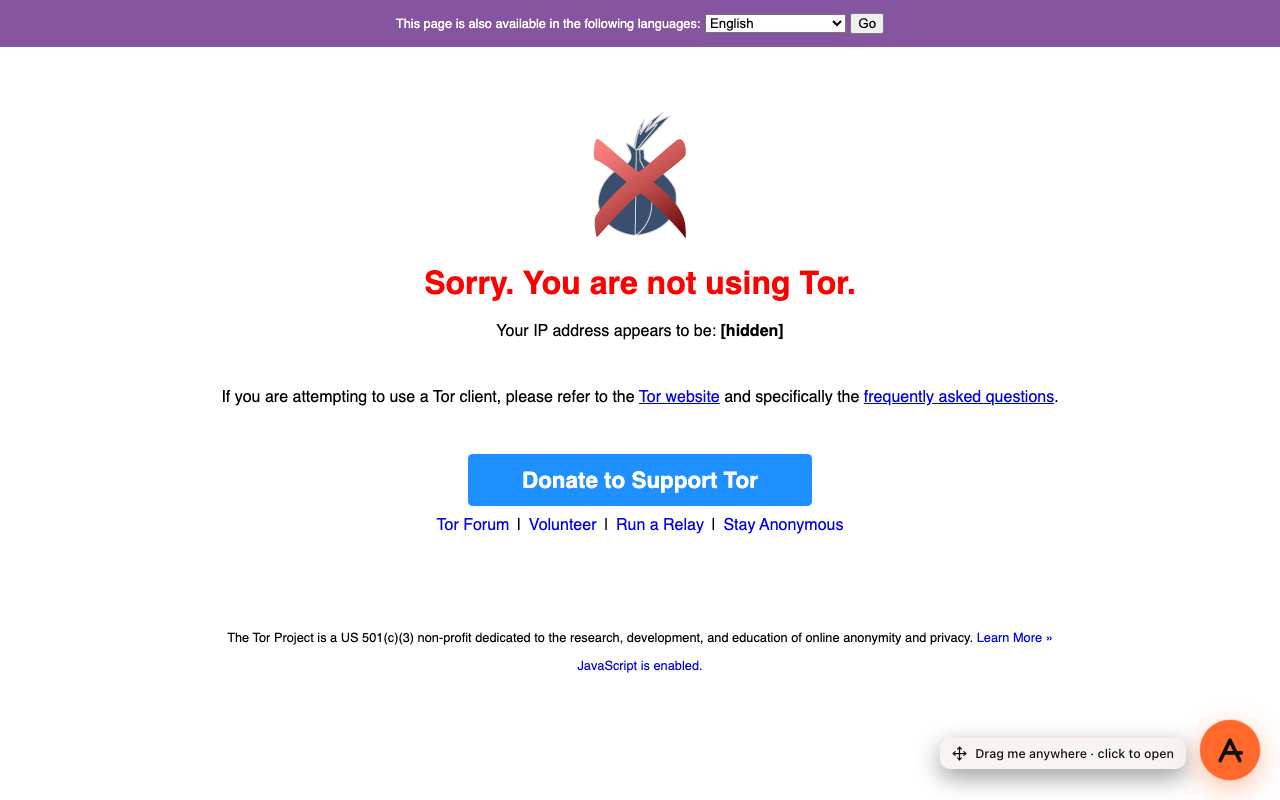
Tor Browser picks a path through three relays: a guard that knows your address but not your destination, a middle relay that knows neither, and an exit that knows the destination but not who you are. Your traffic is wrapped in three layers of encryption and each relay peels one. Websites see the exit relay's address, which is public, so many sites recognise Tor traffic and some challenge or block it. The price of this design is speed: three hops around the world, run by volunteers, are slower than a single proxy or VPN server. A web proxy is a single hop. The proxy operator sees both who connected and which pages were opened, and a website sees the proxy's address. We opened the Tor Project's own checker, check.torproject.org, through AnyProxy's Virginia region: it answered 'Sorry. You are not using Tor.' and showed the proxy's address, not a Tor exit. That is the right answer. Use Tor when hiding who you are from the service and the network matters more than speed; use a web proxy or VPN for quick access to a blocked site where you trust the operator. Some countries block Tor's public relays; bridges exist for that.
In practice
Tor in the real world
Tor sends your traffic through three volunteer relays so no single relay knows both who you are and where you are going. The Tor Project publishes daily user estimates by country on Tor Metrics, which show usage jumping when countries tighten censorship. Governments respond in turn — Russia blocked the Tor Project's website and many relays in December 2021 — which is why Tor offers bridges for censored networks.
Sources: Tor Metrics — users by country · Global Voices — Russia blocks Tor website (2021)
We checked
A web proxy is not Tor
Questions about Tor
Related terms