Anonymous proxy
On proxy lists, an anonymous proxy is one that does not pass your real IP address to the site, though it may still reveal that a proxy is in use.
Explanation
In depth
The label comes from free-proxy lists, which sort proxies by what they add to each request. A transparent proxy forwards your real IP in a header such as X-Forwarded-For. An anonymous proxy leaves your IP out but may still add a header such as Via or Forwarded that tells the site a proxy is involved. An elite proxy adds none of them. The scale is only about HTTP headers. It says nothing about who runs the proxy, what they record, or whether the site recognises the proxy's address as a proxy. It also does nothing about what your own browser sends: cookies, a signed-in account and the browser's user-agent and client hints all still reach the site. Through AnyProxy, the header check below found no forwarding headers at all, which by this scale would rank it above "anonymous". That should not be read as an anonymity promise. AnyProxy's privacy policy says not to treat it as an anonymous or no-logs service: operating it can record destination hosts, session identifiers and a hashed IP address.
In practice
Anonymous proxy in the real world
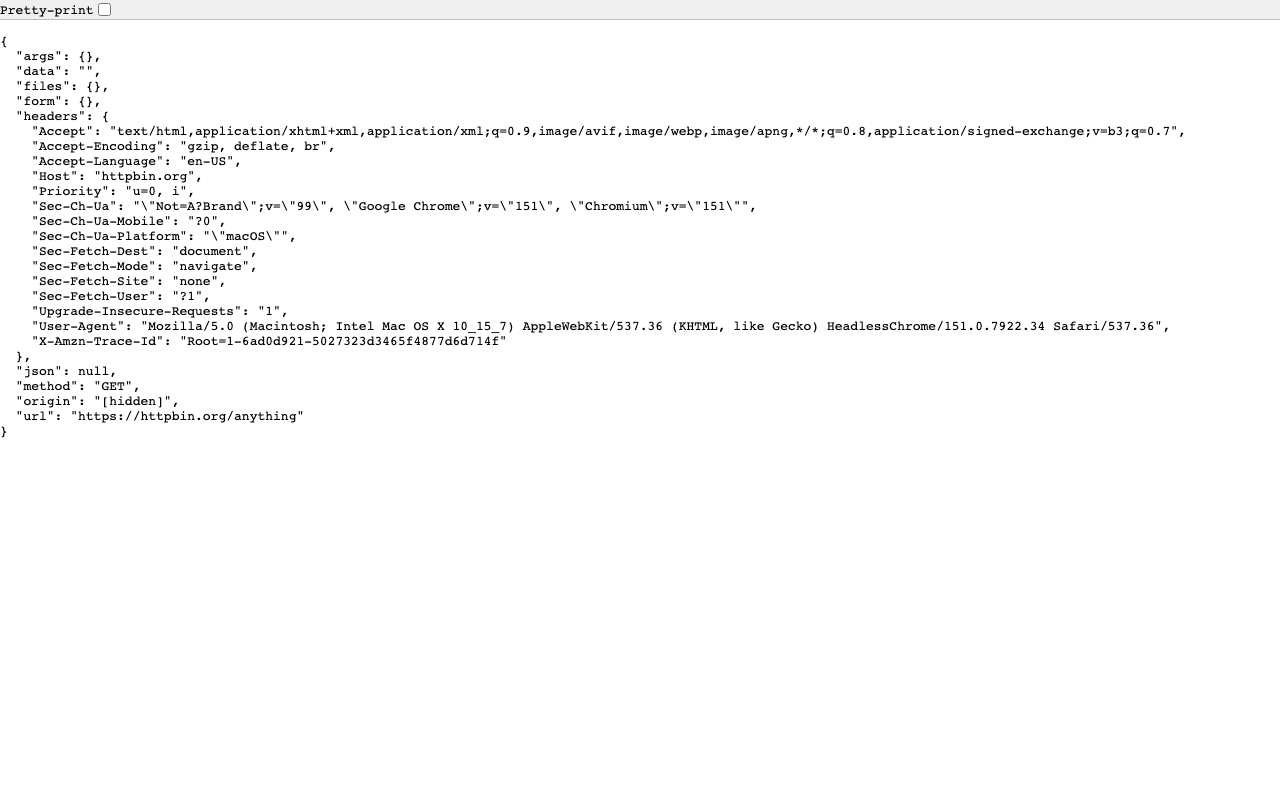
On 15 October 2026 we opened httpbin.org/anything, which echoes back the request it received, through AnyProxy's Singapore server. The headers it listed contained no X-Forwarded-For, Via or Forwarded, and its "origin" field held a single address, the proxy's (hidden in the screenshot). The same echo showed the browser's user-agent, Sec-Ch-Ua client hints and Accept-Language arriving unchanged: the site learns nothing about your IP, but still learns about your browser.
Sources: RFC 7239 - Forwarded HTTP extension · AnyProxy privacy policy
We checked
What headers reached the site
Questions about Anonymous proxy
Related terms