Unblock Google.
From anywhere.
Free Google proxy. No install. Works on a Chromebook, a phone, and any managed browser.
Verified · 2026-10-15
On 15 Oct 2026 Google Search through AnyProxy hit Google's 'unusual traffic' reCAPTCHA page (/sorry) on both Singapore and Frankfurt exits. The Google home page via Frankfurt opened behind a German-language EU consent screen ('Bevor Sie zu Google weitergehen'), and Google Maps loaded its interface but not the requested place or map tiles. Google has been blocked in mainland China since 2014 and Google News in Russia since March 2022.
What we tested through AnyProxy
What works on Google, and what doesn't
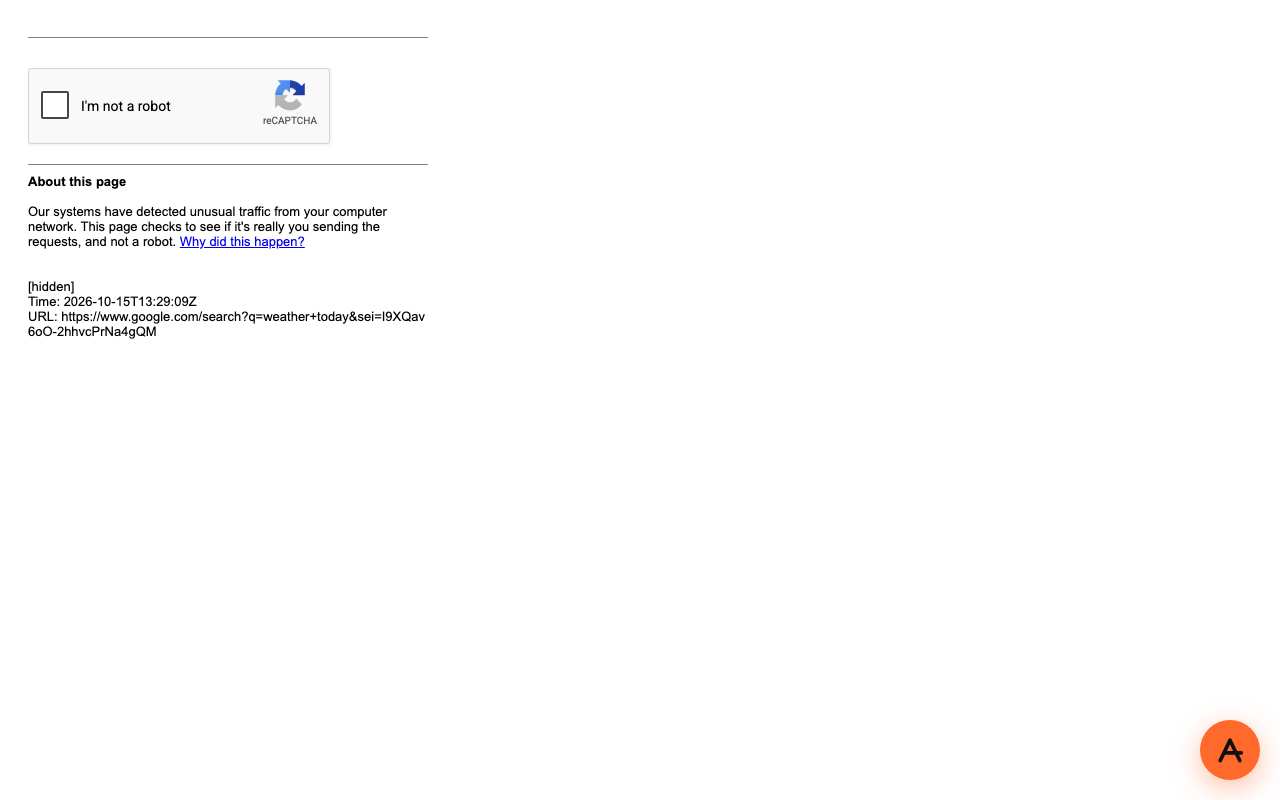
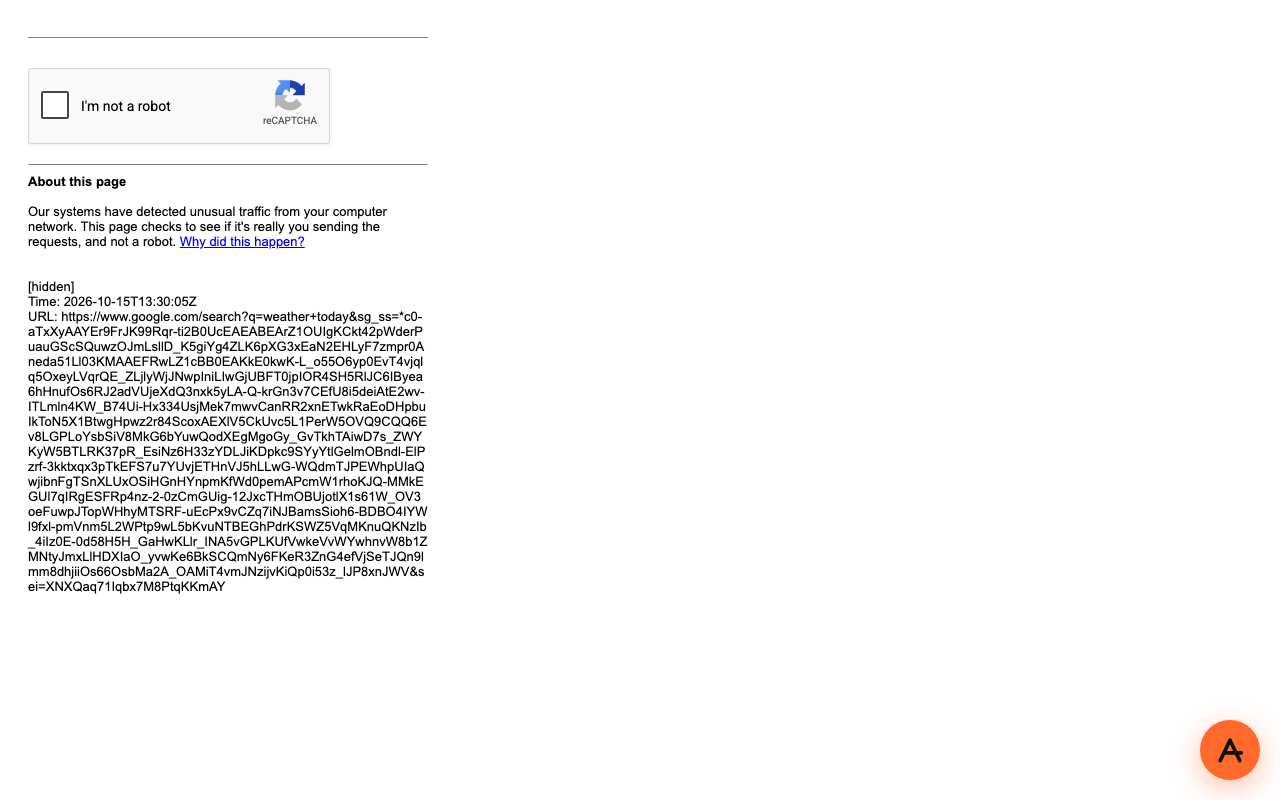
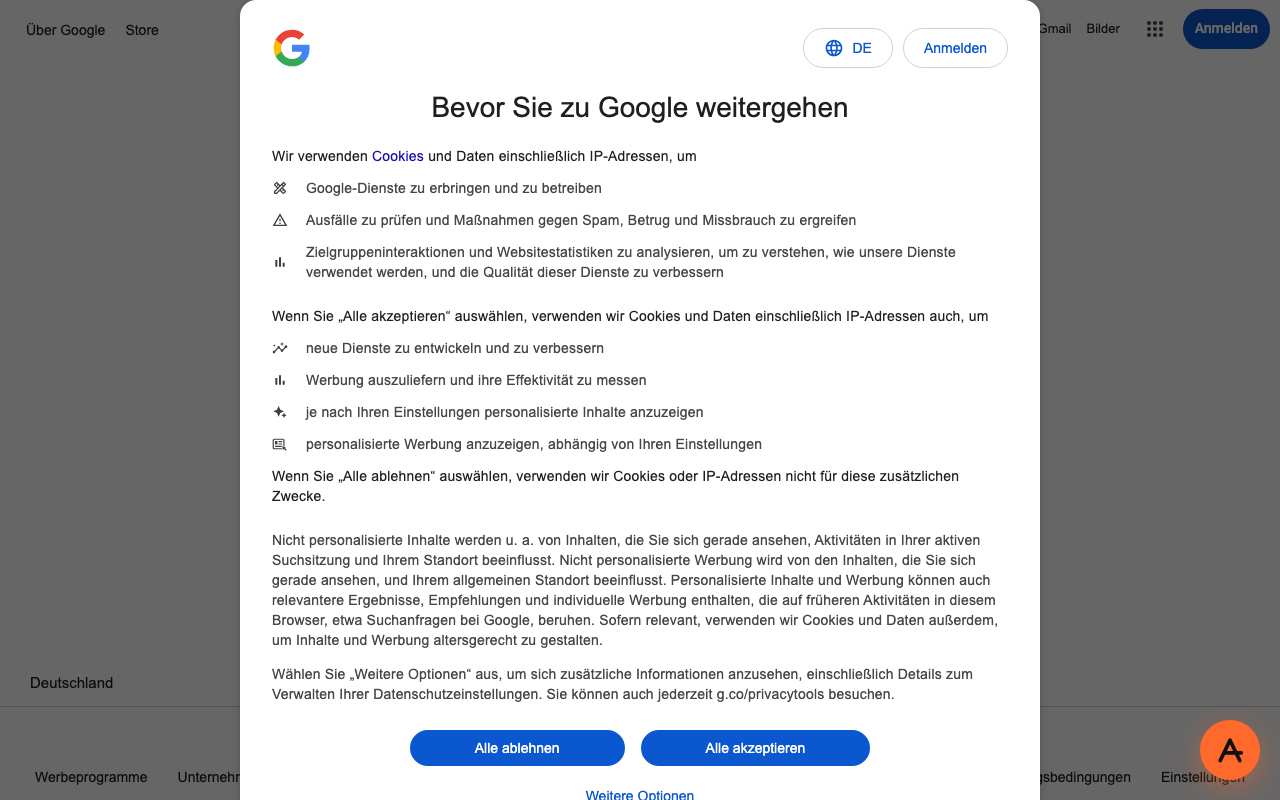
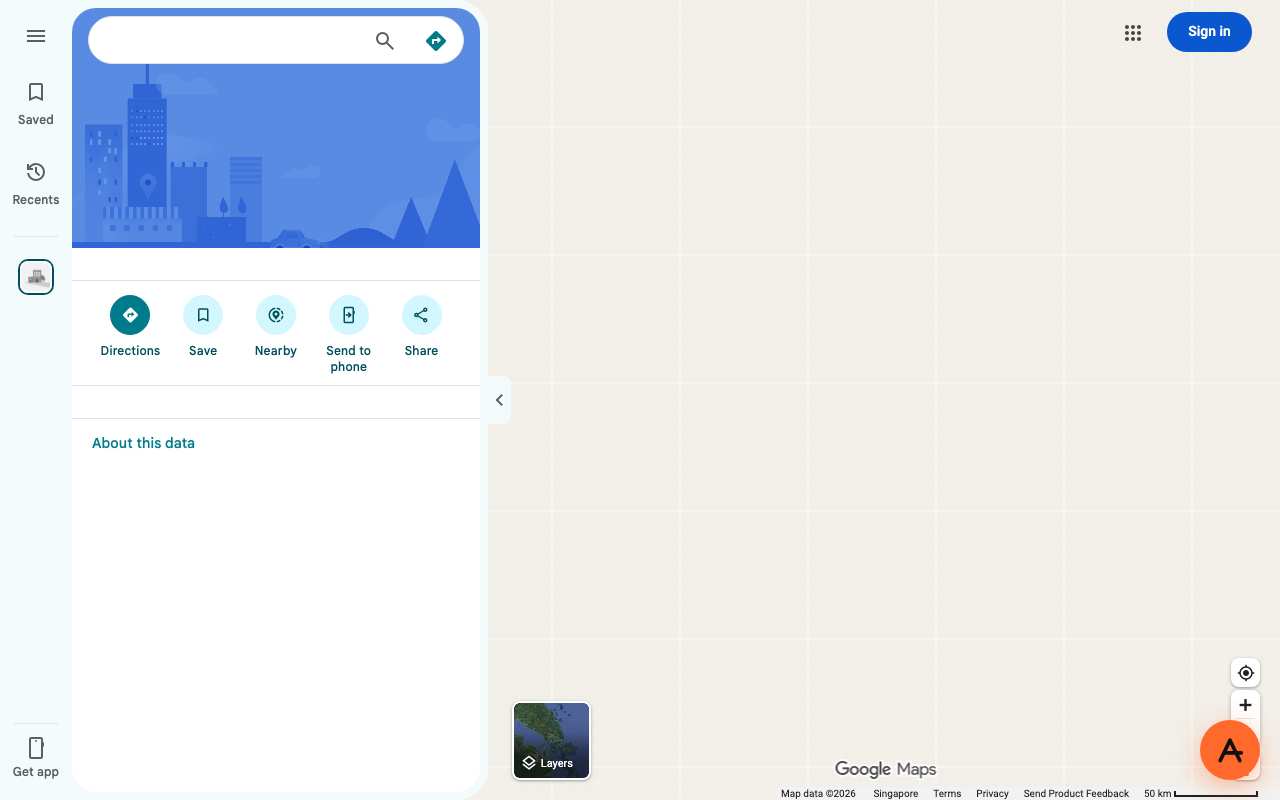
Tested from our proxy exits with a fresh browser, no account. Results can change when Google changes.
What is a Google proxy?
The short answer
A Google proxy is a server that fetches Google for you and returns the page through your browser. Instead of your device asking google.com directly, your browser asks anyproxy.site, and we ask Google on your behalf. The site sees our server, not you. Your network sees anyproxy.site, not Google.
That single hop is what lets a blocked Google page open. No app to install, no account to make. Six regions, sorted by real latency.
Google infrastructure, verified
Google itself is healthy
When Google will not load, Google's own servers are rarely the cause. Here is a dated snapshot of the real google.com infrastructure from DomainScan on 2026-10-05 — compare against your network's symptoms.
15 of 15 public DNS resolvers returned an address for google.com in this snapshot. A resolver with no answer is not proof of blocking anywhere. If your own network returns nothing or a different address, the problem is more likely on your network than at Google.
Where Google is blocked
Google block map, with mechanism
The countries that actively block Google, how they do it, and when. Rows link to their source where we have one; rows without a link are not independently verified.
From your country
Where Google is restricted
How to unblock Google
Three steps, no account
Type google.com
It is already in the box above. AnyProxy opens the site's home page; go deeper from there.
Pick your region
We start you on the nearest server. A closer region means smoother loading.
Browse
Google opens in this tab. The tests on this page show which features worked for us.
Google — the timeline
Dated events in Google's censorship history
- Jan 2010Google announces 'A new approach to China' after attacks from China and says it will stop censoring google.cn results. source
- Mar 2010Google redirects google.cn to uncensored google.com.hk. source
- Jun 2014Ahead of the Tiananmen anniversary GreatFire.org reports all Google services, encrypted or not (Search, Gmail, Images, Translate), blocked in China. source
- Mar 2022Roskomnadzor blocks news.google.com in Russia at the Prosecutor General's request, over reporting on the war in Ukraine. source
What the proxy cannot do for Google
Honest caveats
- Google search through a shared proxy exit lands on the 'unusual traffic' reCAPTCHA page (both sg and fr on 15 Oct 2026). That page prints your connection's IP address.
- Frankfurt (fr) gives you google.com in German with an EU consent screen first; Singapore is English.
- Google Maps loaded its shell but not the map tiles or the requested place in our test.
Need every app on your device covered, not just one browser tab? That is a VPN's job — see proxy vs VPN for when each is the right tool.
FAQ
Google, specifically
On managed networks
Open Google on managed devices
Managed networks — managed Wi-Fi, café PCs, hostel internet — often filter Google at the DNS or IP level. Content filters used by schools and companies sort sites into categories such as "search", and administrators choose which categories to block.
Because AnyProxy is a website — not an app or extension — a Chromebook or managed browser that restricts installs still opens it in Chrome. Type google.com and Google opens in the same tab, as far as the site allows it; see the tests above. Note: your organisation's acceptable-use policy still applies; check it before use.
Related
Unblock these too
By country
Country-specific evidence
Historical reports describe particular dates and networks. They are not live availability tests. Country context does not select an exit server.
IranOpen
Loaded normally in 96.9% of 448 OONI tests from Iran (Jul–Oct 2026); Google has been blocked for periods in the past Source
ChinaBlocked · 2010 → fully by 2014
Great Firewall blocks all Google services after Google stopped censoring search in 2010 Source
RussiaRestricted · Mar 2022
Google News blocked by Roskomnadzor; Search remains available Source