Search for “best free web proxy” and most results are lists with no dates and no test results, so you cannot tell whether a named proxy still works. This one is ranked on two dated tests, and it is published by AnyProxy, which ranks itself first. Treat that placement with suspicion; that is why every claim below points to a test, including the ones we lost. The same results, with screenshots, are on our ranked list page.
How we tested
- Four everyday tasks, 15 October 2026, logged out, through each proxy on the same afternoon: play a YouTube video (“Me at the zoo”), open a public Instagram profile, open TikTok Explore, and load ChatGPT. A video counted only if its clock moved.
- Six Cloudflare-protected sites, 12 October 2026: 4chan, Stack Overflow, nixos.wiki, Chatiw, Omegle Web and Glimmer Fics, each left for at least 25 seconds. Many forums, wikis and chat sites show Cloudflare’s “Just a moment…” check, and through most web proxies that page never finishes. The full grid is in best proxies for Cloudflare-protected sites.
- Homepage measurements, 5 October 2026: HTTPS setup (HSTS), security headers and cookies set on first load. These break ties; they do not prove what an operator logs.
What we did not test: logged-in use (we never sign in to accounts), long sessions, and reachability from inside filtered school or office networks. Whether a proxy opens on your network depends on that network’s rules.
Scores from the four-task test: AnyProxy 3 of 4, Proxyium 2 (plus 1 partial), CroxyProxy 1 (plus 1 partial), 4everProxy 0 (plus 1 of 2 Instagram profiles). Cloudflare grid: AnyProxy 6 of 6; CroxyProxy, BlockAway, Proxyium, 4everProxy and TrickyBird 0 of 6.
The ranking
1. AnyProxy (anyproxy.site)
What it is. A browser-based web proxy: paste a site, pick a region, nothing to install. The free tier has three regions (Singapore, Frankfurt, Virginia) and shows ads on AnyProxy’s own pages. Pro is $4.99 a month or $39 a year and removes those ads, adds Tokyo and Los Angeles servers, and gives priority support.
What worked. The YouTube test video played to the end through Singapore (19.1 s of 0:19). TikTok Explore loaded with a preview playing. ChatGPT’s logged-out page loaded through Virginia, and through Singapore in a regular browser window.
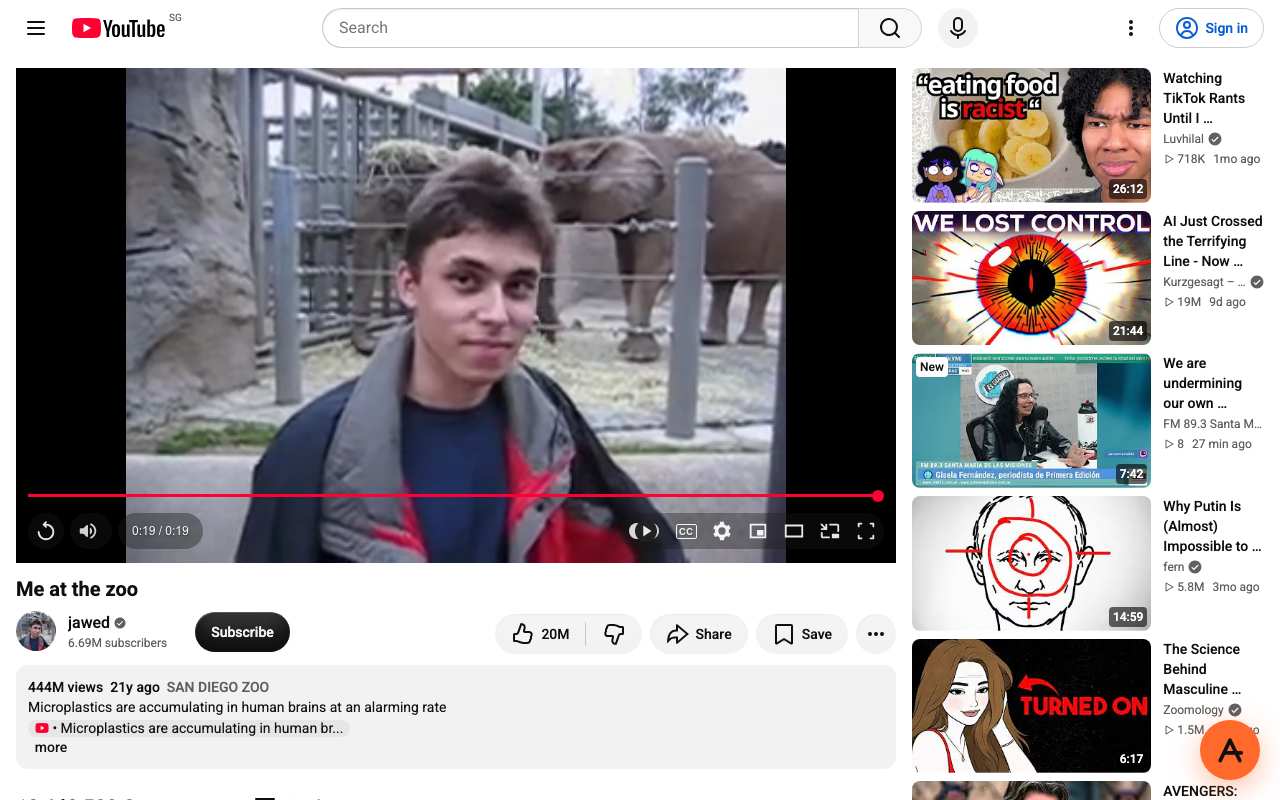
Caption: YouTube “Me at the zoo” played to the end through AnyProxy, Singapore region, 15 October 2026.
Cloudflare-protected sites. 6 of 6 loaded on 12 October 2026. AnyProxy completes the check on its own servers, so the first load of a site can take a few extra seconds (3 to 8 s in that test); later loads of the same site were immediate. Sites that block all datacenter traffic stay blocked: umingle.com showed Cloudflare’s “Sorry, you have been blocked” through all three regions.
What failed. Public Instagram profiles redirected to the login page in all three regions, so AnyProxy lost that task to 4everProxy. ChatGPT stayed on Cloudflare’s “Verifying…” check through Frankfurt. In separate tests the same day, Reddit refused every AnyProxy region with its “blocked by network security” page, Google Search showed an “unusual traffic” CAPTCHA, and YouTube Shorts stayed black. Netflix and Disney+ are not supported; they need an account and apply their own licence and region checks.
Honest downsides. We launched publicly in 2026, so we have less track record than ProxySite or CroxyProxy. AnyProxy is not a no-logs service: our privacy policy lists what service operation can record.
Best for. Most people, especially when the site you need sits behind Cloudflare.
Try it: anyproxy.site or jump to /unblock/youtube/ or /unblock/tiktok/.
2. Proxyium (proxyium.com)
What it is. A free proxy with a clean interface, available in about a dozen languages. It runs the same engine as CroxyProxy.
Tested. TikTok Explore and ChatGPT loaded. The YouTube watch page loaded but the video did not start, and Instagram returned “Request failed”.
Measured. HSTS for a year, X-Frame-Options sent, no server cookies on first load, TLS 1.2. Its homepage offers three server locations and labels them itself: Poland/France “Fast”, United States and Singapore “Slow”.
Cloudflare-protected sites. 0 of 6 on 12 October 2026, the same “Unable to connect” result as CroxyProxy.
Honest downsides. Few locations, no paid plan, and its privacy policy says logs needed for law-enforcement requests are kept for 60 days.
Best for. Users near Europe who want a clean free proxy for sites without Cloudflare’s check. See the Proxyium comparison.
3. CroxyProxy (croxyproxy.com)
What it is. One of the largest free web proxies, running since 2016 and available in many languages. Premium is sold through Patreon at $3.50 a month; it removes its proxy ads and adds a choice of servers in Germany, the UK, Spain, the USA, Canada and Israel (checked October 2026).
Tested. ChatGPT loaded on two runs. The YouTube watch page loaded behind YouTube’s EU cookie screen but the video stayed at 0:00. TikTok showed a puzzle CAPTCHA over an empty grid, and Instagram returned “Request failed”.
Measured. SSL grade A (94), TLS 1.2. Its homepage sent two conflicting HSTS headers, and browsers obey the first, max-age=0, which turns HTTPS-only enforcement off. No Referrer-Policy or X-Frame-Options header, and two cookies set on first load.
Cloudflare-protected sites. 0 of 6 on 12 October 2026: every test site stopped at “Performing security verification” and ended in “Unable to connect to the website”.
Honest downsides. Ads on the free tier unless you pay; weaker security headers than the others here.
Best for. ChatGPT and text-heavy sites, if you want a long-running name. Full measurements in our CroxyProxy comparison.
4. BlockAway (blockaway.net)
What it is. A free web proxy that appears to be run together with CroxyProxy. On our October 2026 checks it sent the same headers and loaded the same third-party scripts, and its “Get premium” button linked to CroxyProxy’s Patreon.
Measured. SSL grade A, TLS 1.2, HSTS effectively off (max-age=0 first), two cookies on first load.
Cloudflare-protected sites. 0 of 6 on 12 October 2026, the same result as CroxyProxy.
Honest downsides. If you are leaving CroxyProxy, BlockAway is not really a different service. It was not part of the four-task test.
Best for. Users who recognise the BlockAway brand. See the BlockAway comparison.
5. 4everProxy (4everproxy.com)
What it is. A long-running service that combines a free web proxy, a video proxy and a paid VPN. Its homepage lists ten web-proxy servers, from Quebec and Sydney to Warsaw, and 20+ exit-IP locations, with switches to remove scripts or block cookies.
Tested. It showed NASA’s public Instagram profile (header, bio and highlights behind a sign-up box), the best Instagram result in the test; a second profile went to the login page. YouTube, TikTok and ChatGPT did not load.
Measured. SSL grade A (98), TLS 1.3, HSTS with preload, the strongest HTTPS setup of the competitors we checked. No Referrer-Policy, X-Frame-Options or Content-Security-Policy, and one cookie on first load.
Cloudflare-protected sites. 0 of 6 on 12 October 2026; all six sat on “Just a moment…” through its Quebec server.
Honest downsides. Paying gets you a VPN ($9.95 for one month), not an ad-free web proxy.
Best for. Choosing a specific exit country, or a logged-out look at an Instagram profile. See the 4everProxy comparison.
6. TrickyBird (trickybird.com)
What it is. A newer free web proxy with an optional Chrome extension and no region picker.
Measured. No cookies on landing, HSTS with preload, a Content-Security-Policy and X-Frame-Options (12 October 2026). Its security page lists the access-log fields it keeps and a 48-hour limit, the most specific logging policy of any proxy here.
Cloudflare-protected sites. 0 of 6 on 12 October 2026. It was not part of the four-task test.
Honest downsides. Free sessions end after 60 minutes, and Premium is $9.99 a month.
Best for. Short sessions where a written log policy matters most. See the TrickyBird comparison.
Not ranked: ProxySite and KProxy
ProxySite (proxysite.com) has been online since 2012 and offers US and EU servers. On 12 October 2026 every proxied request bounced back to its homepage from our test browser, so we got no proxied page to judge. It is ad-supported with no paid plan. See the ProxySite comparison.
KProxy (kproxy.com) is one of the oldest names in web proxies, also known for a browser extension. On 5 October 2026 www.kproxy.com presented an HTTPS certificate issued for *.yanacyber.fr, not kproxy.com, so Chrome showed “Your connection is not private”. Do not click through a certificate warning to use a proxy: your browser cannot confirm who it is talking to. See the KProxy comparison.
How long these results hold
Proxy results change. Sites adjust their bot checks, proxies change engines, and network filters add proxy domains to their block categories. Our own ChatGPT result moved within three days: on 12 October all three AnyProxy regions stuck at Cloudflare’s check, and on 15 October Virginia and Singapore loaded it. Treat any ranking without a test date, this one included, as a starting point, and check the date before you rely on it.
The honest recommendation
Start with AnyProxy for YouTube, TikTok, ChatGPT through Virginia, and sites behind Cloudflare’s check. For a logged-out look at an Instagram profile, 4everProxy did better in our test. If anyproxy.site is blocked on your network, Proxyium or CroxyProxy are the next options, with the limits above. Do not sign in to important accounts through any free proxy: the operator handles the traffic.
Ready to test? Try AnyProxy now: no install, no signup, three free regions.