IPv6 leak
An IPv6 leak is when a VPN protects your IPv4 traffic but your device still sends IPv6 traffic directly, exposing your real IPv6 address to websites.
Explanation
In depth
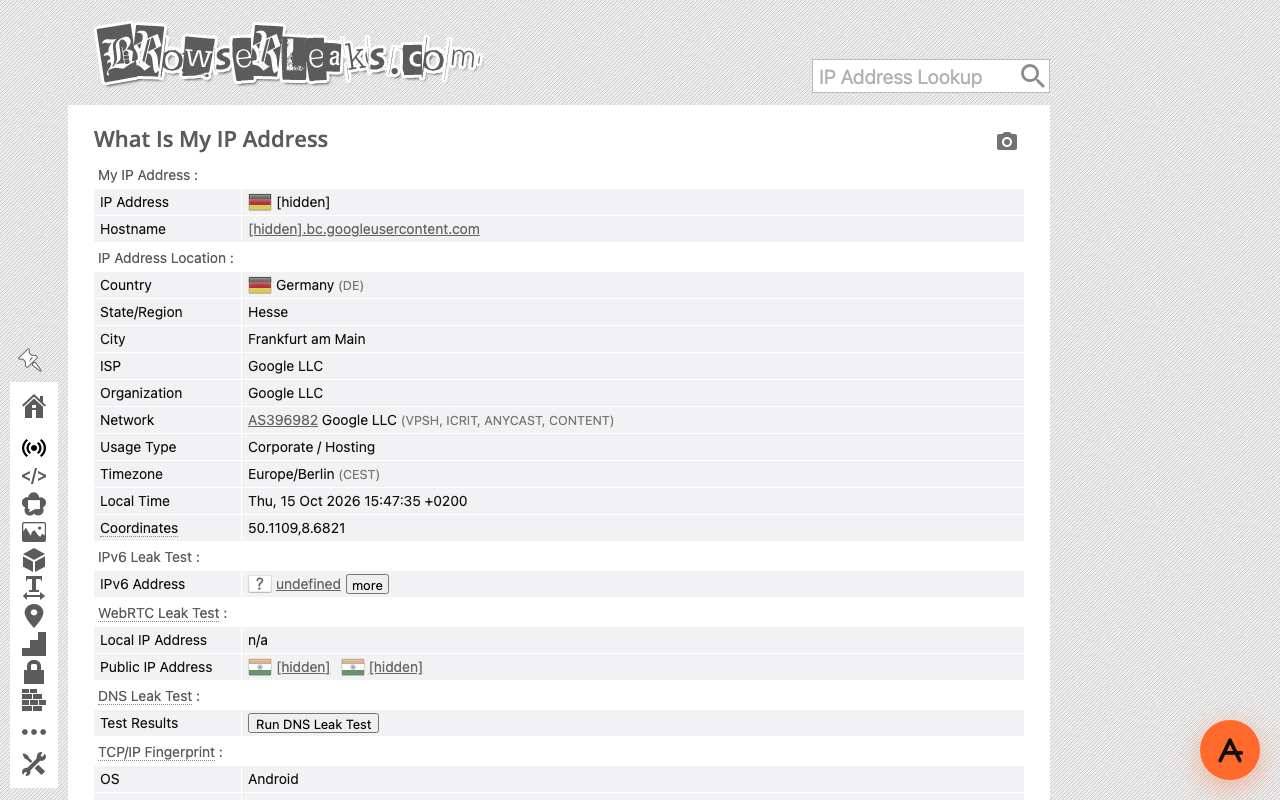
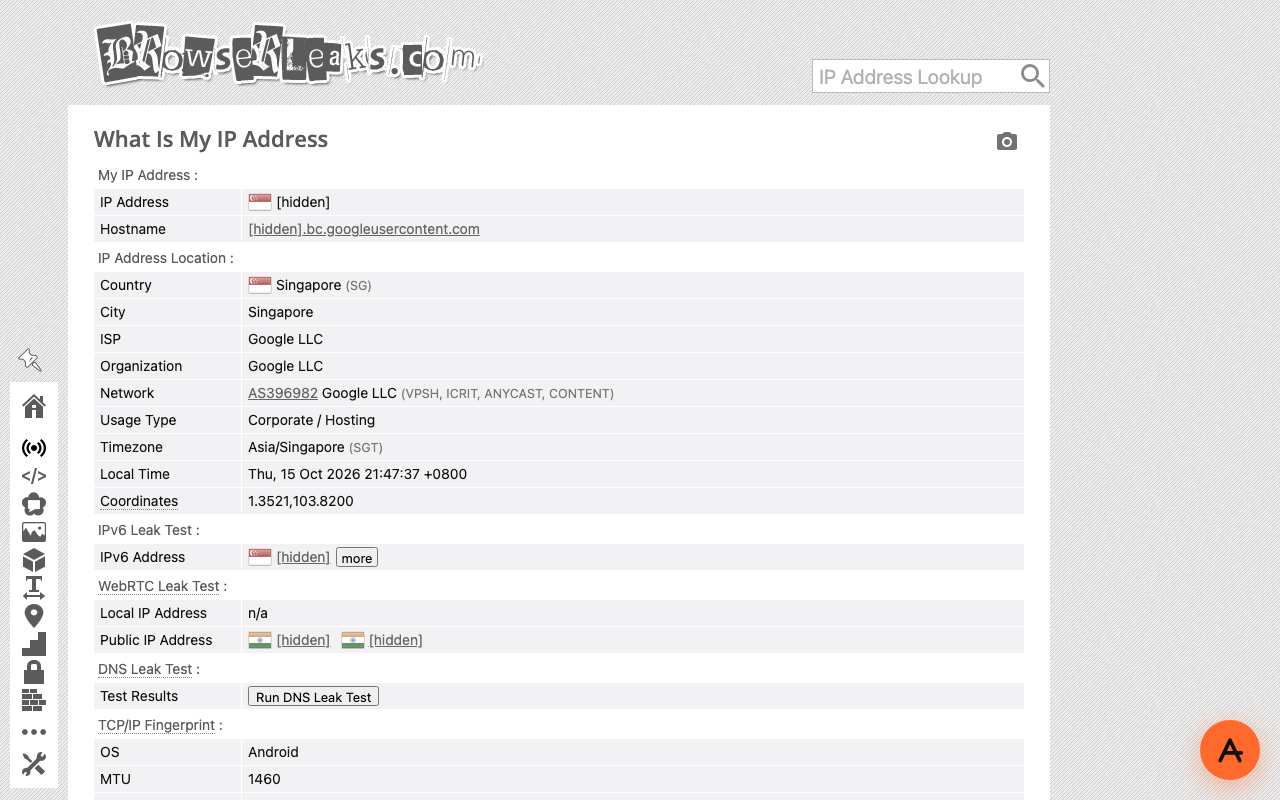
Most devices now have two addresses: an older IPv4 one and a newer IPv6 one. Many networks, and a large and growing share of Google's users, connect over IPv6 when it is available. A VPN that only routes IPv4 leaves IPv6 alone, so any site reachable over IPv6 is contacted directly and sees your real IPv6 address, which often identifies your home connection more precisely than IPv4. Good VPN apps either route IPv6 through the tunnel or block it while connected. A web proxy works at a different level. Your browser only talks to the proxy; the proxy server then contacts the site over whichever protocol it has. We saw both cases on 15 October 2026 on browserleaks.com/ip: through AnyProxy's Frankfurt region the IPv6 row read 'undefined', while through Singapore it showed a Singapore IPv6 address belonging to the proxy. In neither case did the test machine's own IPv6 appear in the page's IP rows. The same page's WebRTC row, however, still listed the test machine's own addresses, because WebRTC is not carried by a web proxy. So the honest summary: no IPv6 leak through page requests, but WebRTC is a separate gap.
In practice
IPv6 leak in the real world
An IPv6 leak happens when a VPN tunnels IPv4 traffic but the device still has a working IPv6 route, so anything reachable over IPv6 goes out directly. It is not a niche case: Google's own statistics show a large and growing share of users reaching it over IPv6. A VPN that does not handle IPv6 should block it; a web proxy is unaffected, because the browser only connects to the proxy.
Sources: Google — IPv6 statistics
We checked
IPv6 rows seen through two AnyProxy regions
Questions about IPv6 leak
Related terms