WebRTC leak
A WebRTC leak is when a website uses the browser's built-in calling technology (WebRTC) to discover your real public IP address, even though your normal page traffic goes through a proxy or VPN.
Explanation
In depth
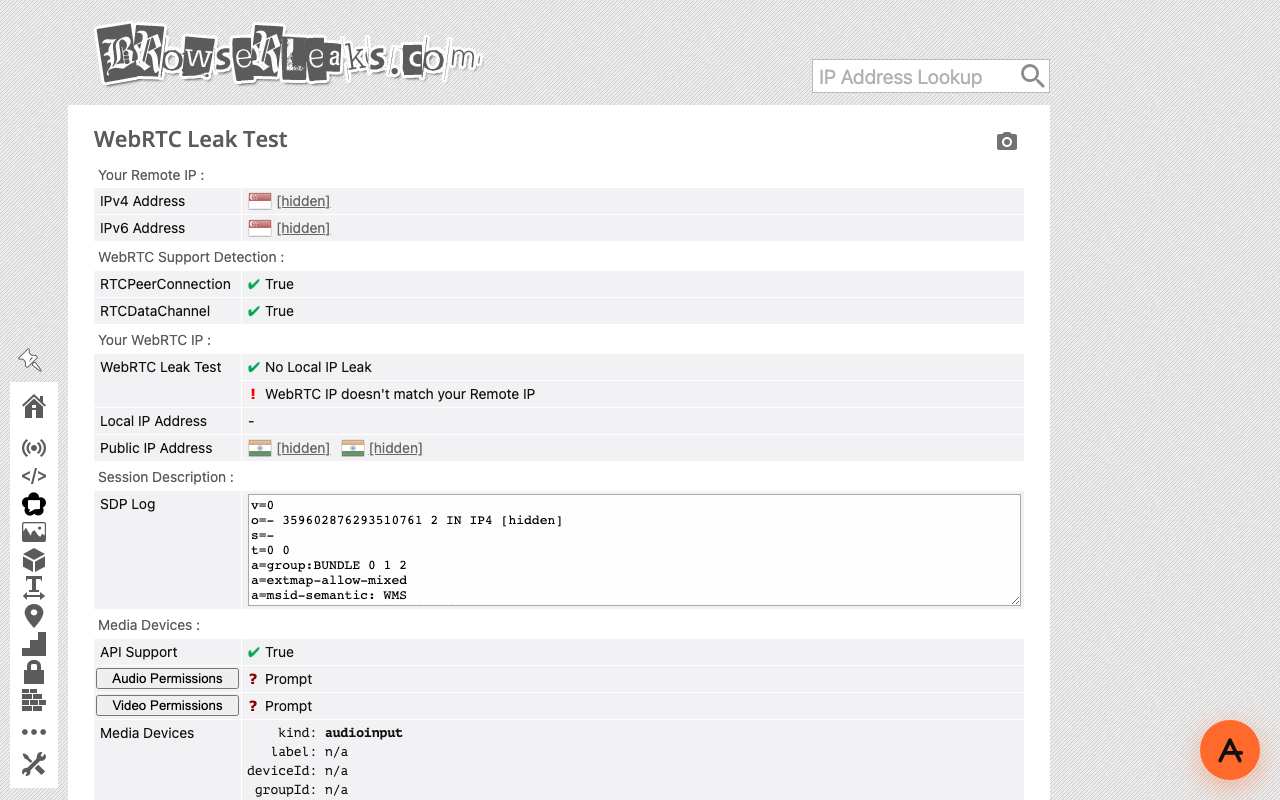
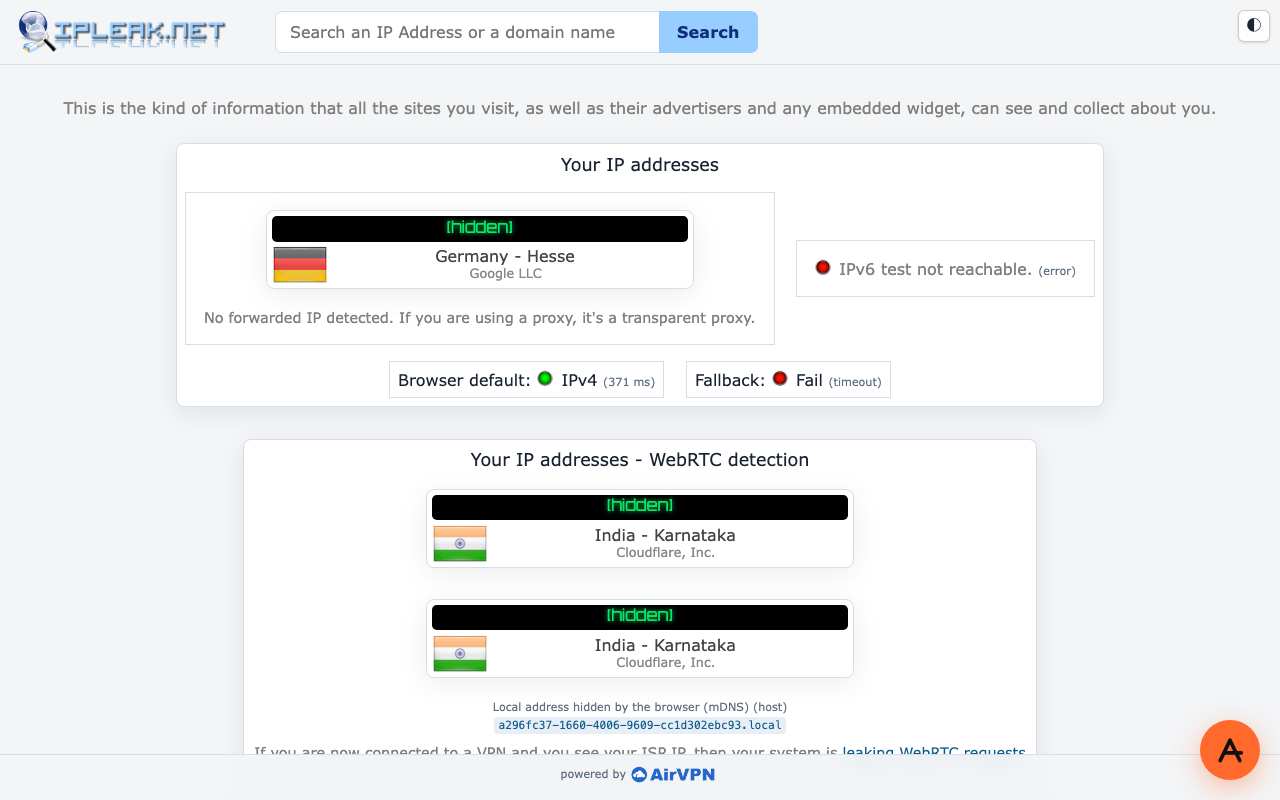
WebRTC lets a web page set up voice, video and data connections directly between browsers. To find a route between two people, the browser contacts STUN servers on the internet and learns the public address its network presents. A page can trigger that process with a few lines of JavaScript, without any call or permission prompt, and read the addresses back. Modern browsers hide your local network address behind a random '.local' name, but they still reveal the public one. We ran browserleaks.com/webrtc through AnyProxy's Singapore region on 15 October 2026. The page's normal IP rows showed the Singapore exit. Its WebRTC section reported 'No Local IP Leak', but also 'WebRTC IP doesn't match your Remote IP' and listed two public addresses of the test machine's own connection. ipleak.net through Frankfurt showed the same pattern. In plain terms: a web proxy rewrites and relays web pages; it does not carry WebRTC traffic, so it does not hide your IP from WebRTC. If that matters, disable WebRTC or restrict it with your browser's settings or a trusted extension, or use a VPN that also covers the browser's UDP traffic.
In practice
WebRTC leak in the real world
WebRTC lets browsers make voice and video calls directly. To find a path between two people it asks STUN servers for your public address — and a page could read that address even if you were browsing through a proxy. Browsers have tightened this, hiding local addresses behind random .local names, but WebRTC traffic still does not go through a web proxy. That is why calls on WhatsApp Web, Discord and Instagram DMs fail through one.
Sources: RFC 8828 - WebRTC IP Address Handling Requirements · BrowserLeaks - WebRTC leak test
We checked
WebRTC leak tests opened through AnyProxy
Questions about WebRTC leak
Related terms