Messaging apps get restricted for different reasons than social media. Some governments block a whole platform; others leave messaging alone and restrict only internet calls, often because only licensed telecom operators may offer voice services. This page covers how each major messaging platform fares under network filters, using OONI measurements from 15 July to 15 October 2026 and dated sources, and what a browser proxy can and cannot carry, from our own tests on 15 October 2026.
The basic rule for a browser proxy: it carries only the web version, and not calls. Installed apps make their own connections and never go through a proxy in a browser tab. Voice and video calls in web apps use WebRTC, which connects outside the proxied page and can reveal your real IP address. In our WebRTC leak test through AnyProxy, the test page saw the proxy, but WebRTC exposed the test machine’s own public addresses.
Blocked at national level: In OONI tests between 15 July and 15 October 2026, whatsapp.com loaded in 8.9% of 700 tests from China and 5.6% of 7,061 from Iran, where most failures were confirmed blocks. Iran’s Supreme Council of Cyberspace decided in December 2024 to lift restrictions on WhatsApp, but when access partly returned after the 2026 shutdowns, WhatsApp was still on the blocked list (Al Jazeera, 31 May 2026). In February 2026 WhatsApp said Russia had attempted to block it fully (Bloomberg, 12 Feb 2026).
Calls only: In the UAE, whatsapp.com loaded in 2,274 of 2,314 OONI tests. What is restricted there is calling, because only licensed operators may provide VoIP (Khaleej Times, 23 Jun 2017). In Egypt, whatsapp.com loaded in 97.8% of tests, while Freedom House reported WhatsApp calling still inaccessible as of May 2025. Saudi Arabia lifted its ban on internet calling apps in September 2017 (Engadget, 20 Sep 2017).
Through AnyProxy: On 15 October 2026 web.whatsapp.com loaded its “Scan to log in” QR code through Singapore and Frankfurt. We did not link a phone, so reading and sending messages is untested. A wa.me share link through Frankfurt stalled on AnyProxy’s loading screen. WhatsApp Web needs the phone app to link, and a web proxy cannot carry WhatsApp calls.
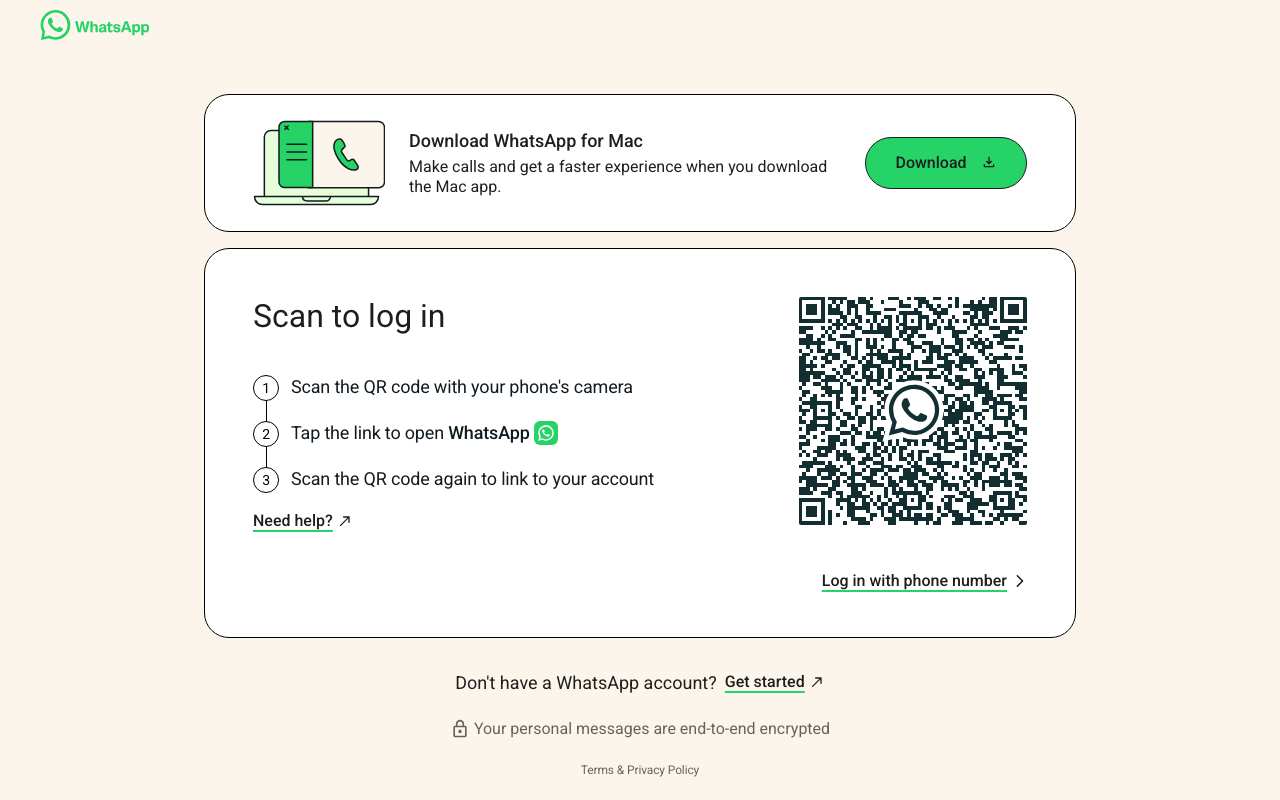
Caption: web.whatsapp.com through AnyProxy Singapore, 15 Oct 2026. The QR code rendered; linking a phone was not tested.
China: Apple removed WhatsApp, Threads, Telegram and Signal from its China App Store in April 2024 on the regulator’s order (Caixin, 19 Apr 2024), so travellers need the app installed before they arrive. Guide: WhatsApp in China.
Telegram
Blocked at national level: Iran, since a Tehran court ordered ISPs to block it on 30 April 2018 (Center for Human Rights in Iran, Apr 2018); OONI recorded telegram.org loading in 4.0% of 7,554 tests from Iran in July–October 2026, so the block is thorough, not partial. China (4.7% of 726 tests). Vietnam ordered it blocked on 21 May 2025 (RFA, 23 May 2025). Russia blocked Telegram from 2018 to June 2020, then began slowing it nationwide in February 2026 (Meduza, 10 Feb 2026).
Through AnyProxy: On 15 October 2026 public channel previews such as t.me/s/durov and t.me/s/telegram loaded fully through Singapore and Frankfurt, with no account needed. Telegram Web (web.telegram.org/k/) showed its “Log in by QR Code” screen, but the QR code was still a spinner after 15 seconds, so Telegram Web may not work through AnyProxy.
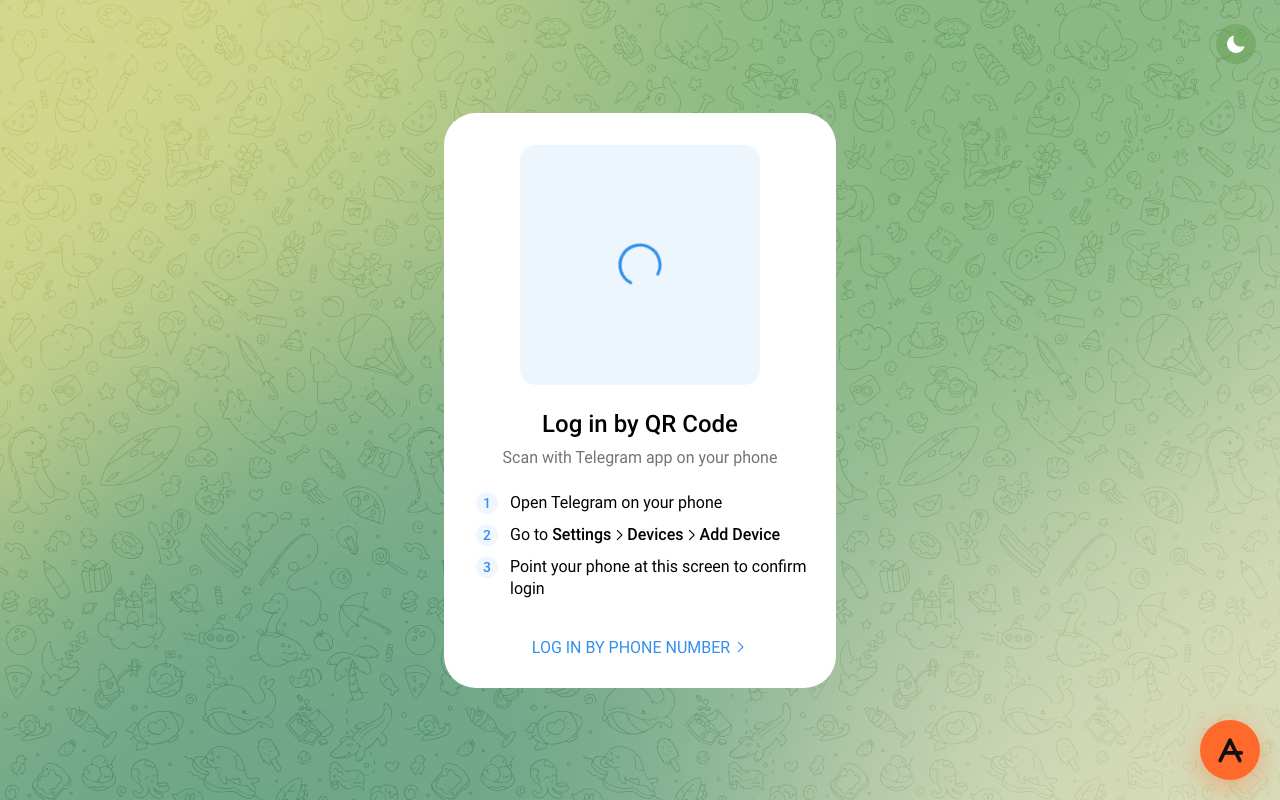
Caption: web.telegram.org through AnyProxy Singapore, 15 Oct 2026. The login QR code never appeared within 15 seconds.
Telegram’s own option: The Telegram apps support MTProto proxies configured inside the app. That is separate from a web proxy and covers the full app.
Discord
Blocked at national level: Russia since 8 October 2024 and Turkey since 9 October 2024 (The Record, 9 Oct 2024). In OONI tests between 15 July and 15 October 2026, discord.com loaded in 3.2% of 1,075 tests from China and 3.5% of 8,074 from Iran. Schools and workplaces often block it through category filters.
Through AnyProxy: On 15 October 2026 discord.com’s home page loaded through Singapore, and discord.com/app reached the login page with a working login QR code, so Discord’s real-time connection opened. Two public pages did not: server discovery showed Discord’s own “Catching our breath” error, and a public invite page stayed blank. Reading or joining servers needs an account, which we did not test. Voice and video use WebRTC and should not be expected to work.
Signal
Blocked at national level: In OONI tests between 15 July and 15 October 2026, signal.org loaded in 5.0% of 7,231 tests from Iran (mostly confirmed blocks) and 6.2% of 691 from China. In Egypt it loaded in 98.3% of 3,591 tests.
No web client: Signal runs as a phone app, with a desktop app that links to the phone. There is no Signal web app for a browser proxy to carry; signal.org is only the project’s website.
Signal’s own proxy support: When Iran blocked Signal in early 2021, Signal added support for TLS proxies that volunteers can run and users can enter in the app (Signal blog, Feb 2021). That route carries the full app, including calls, and is the one Signal itself recommends for blocked countries.
Messenger (Facebook)
Blocked at national level: messenger.com loaded in 1.7% of 458 OONI tests from Iran in July–October 2026. Facebook remains blocked nationally in China, Iran and Russia.
Through AnyProxy: On 15 October 2026 messenger.com opened through Frankfurt behind Meta’s EU cookie-consent dialog. We did not sign in. The Messenger app does not go through a browser proxy.
Why calls are the consistent failure
Voice and video calling fails across every messaging platform through a browser proxy, for two reasons:
- Apps are not proxied. Most calls are made in apps, and a web proxy only carries what loads inside its browser tab.
- WebRTC bypasses the page. In a web app, calls use WebRTC, which looks for direct network paths to the other side. Those paths do not go through the proxied page, and the lookup can reveal your real IP address to the page.
For calls, the alternatives are:
- A VPN, which routes the whole device, apps included. Some countries restrict VPNs; see proxy legality.
- The app’s own proxy support (Signal, Telegram).
- Text only through a web proxy, where the web version works.
Messaging on school and workplace networks
Managed networks often block messaging platforms by category (“instant messaging”, “chat”, “social media”). A web proxy can get past a category block on the destination, but the network still sees connections to AnyProxy’s regional servers, and many acceptable-use policies forbid proxies. See proxies on managed devices before trying.
The one-line summary per platform
- WhatsApp: WhatsApp Web’s QR code loads through AnyProxy; it needs the phone app to link. Calls are not carried.
- Telegram: Public channel previews load; Telegram Web’s login QR did not finish in our test. In-app MTProto proxies cover the full app.
- Discord: Home and login pages load; some public pages do not. Voice and video are not expected to work.
- Signal: No web version. Use the app’s own proxy setting.
- Messenger: messenger.com loads; sign-in untested.