Every major social platform is blocked somewhere: by a school or office filter, a national firewall, or a court order. This guide covers ten platforms: where each is blocked according to network measurements and dated sources, and what actually loaded through AnyProxy when we tried.
How we checked. National-block statements use OONI measurements from 15 July to 15 October 2026 (the share of tests that loaded normally) and dated news sources. Our own tests ran on 15 October 2026 through AnyProxy’s Singapore, Frankfurt and Virginia servers, logged out. We never sign in with real accounts, so posting, DMs and uploads are untested.
The universal rule: the app does not go through a browser proxy. A web proxy carries only what loads in its browser tab, so you use the website (youtube.com, tiktok.com and so on). Platforms also limit logged-out visitors more strictly when the visitor comes from a data-centre address such as a proxy’s, which explains many of the results below.
YouTube
Where it’s blocked: Iran (4.6% of 13,572 OONI tests loaded, mostly confirmed blocks) and China (3.0% of 2,890). Not blocked in Turkey (99.4%), Thailand (99.3%) or Vietnam (99.6%). Often blocked by category on school and work networks.
Through AnyProxy: A regular video (“Me at the zoo”) played to the end through Singapore and Frankfurt; Frankfurt adds YouTube’s EU consent screen. Thai and Vietnamese searches returned local results through Singapore. YouTube Shorts loaded the feed but the video stayed black.
Deep dive: YouTube, best proxies for YouTube, YouTube on managed networks.
Where it’s blocked: Iran (3.1% of 14,886 tests, mostly confirmed blocks) and China (4.1%). Russia blocked it on 14 March 2022 (OPB/AP). Not blocked in the UAE (97.9%) or Indonesia (99.3%).
Through AnyProxy: instagram.com’s login page loaded, but a public profile (instagram.com/nasa) was redirected to the login page in Singapore, Virginia and Frankfurt, also in a visible Chrome window. /reels/ stayed blank. The same profile opened without the proxy, so Instagram’s logged-out wall applies to proxy addresses. Expect to need an account.
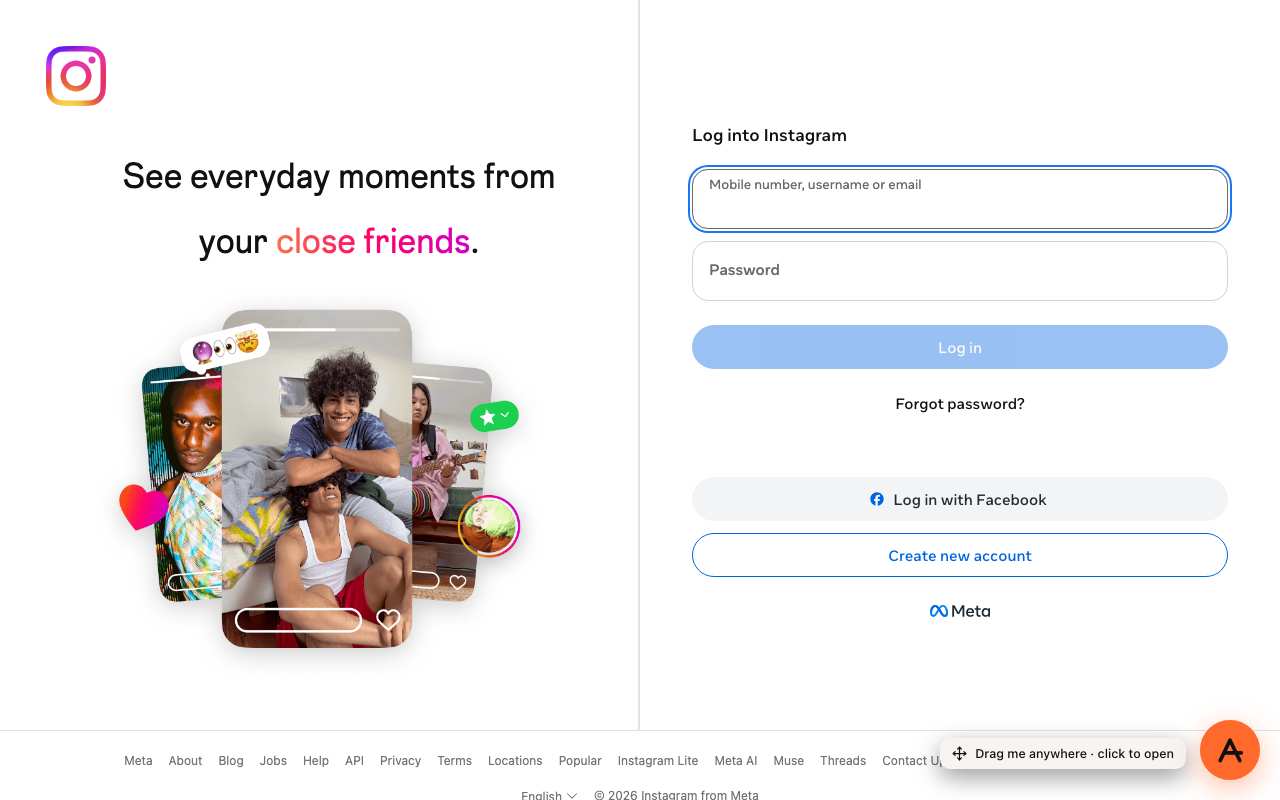
Caption: Requesting instagram.com/nasa through AnyProxy Singapore, 15 Oct 2026, landed on Instagram’s login page.
Deep dive: Instagram, best proxies for Instagram, Instagram on managed networks.
TikTok
Where it’s blocked: India banned the TikTok app in June 2020 under Section 69A (Tribune India). Iran (3.9% of 8,220 tests) and China (2.9%) block it. Not blocked in the UAE (97.4%).
Through AnyProxy: Explore loaded and a single video played through Singapore (player clock 21.6 s after 30 s). A profile through Virginia loaded its header but the video grid said “Something went wrong”; Frankfurt’s For You feed sat behind a login prompt and an EU cookie banner.
Deep dive: TikTok, best proxies for TikTok, TikTok from the UAE.
X (Twitter)
Where it’s blocked: Iran (2.6% of 14,046 tests) and China (3.3%). Nigeria suspended it from June 2021 to 13 January 2022 (TechPoint Africa), Pakistan from February 2024 to May 2025, and Brazil from 30 August to October 2024 (Al Jazeera). In India X loads (98.1% of 29,232 tests) but individual accounts are withheld.
Through AnyProxy: Partial. In a visible Chrome window, NASA’s profile loaded through Singapore under a “Continue to X” prompt and x.com showed its sign-in page through Virginia; Frankfurt returned X’s “Something went wrong!” error, and automated browsers got a blank page in every region.
Deep dive: X, X from India.
Where it’s blocked: Iran (4.1% of 16,898 tests) and China (3.2%); Russia since 4 March 2022. Not blocked in Vietnam (99.6%), which did slow it for about seven weeks in 2020.
Through AnyProxy: facebook.com’s login page loaded. Public Pages (NASA, BBC News) loaded behind a “See more from…” login dialog. messenger.com opened through Frankfurt behind Meta’s EU cookie dialog.
Deep dive: Facebook, Facebook from Vietnam.
Where it’s blocked: Iran (5.2% of 8,019 tests) and China (5.1%). Indonesia unblocked Reddit in July 2026 after about 11 years (Antara). Not blocked in Thailand (99.4%).
Through AnyProxy: Does not work. Every Reddit page we tried was refused by Reddit itself: “You’ve been blocked by network security” on www.reddit.com through Singapore, Frankfurt and Virginia, and “whoa there, pardner!” on old.reddit.com. Reddit says logging in clears the block; we did not test that.
Deep dive: Reddit.
Snapchat
Where it’s blocked: Russia since 10 October 2025 (Al Jazeera, 5 Dec 2025); Iran (3.9% of 7,138 tests).
Through AnyProxy: snapchat.com never got past its ghost-logo loading screen in Singapore or Frankfurt. The public Spotlight page loaded its layout, likes and comments, but the video stayed black. Snapchat is mainly an app, which a web proxy cannot carry.
Deep dive: Snapchat.
Where it’s blocked: China (0 of 176 OONI tests loaded). Not blocked in Iran (94.7% of 1,459), India, Brazil or Vietnam.
Through AnyProxy: Not tested for this update.
Deep dive: Pinterest.
Discord
Where it’s blocked: Russia since 8 October 2024 and Turkey since 9 October 2024 (The Record); Iran (3.5% of 8,074 tests) and China (3.2%). Often blocked by category at school and work.
Through AnyProxy: The home page and the login page (with a working login QR code) loaded through Singapore. Server discovery showed Discord’s own “Catching our breath” error, and a public invite page stayed blank. Voice and screen sharing use WebRTC, which a web proxy does not carry.
Deep dive: Discord, and messaging apps and network filters.
WhatsApp Web
Where it’s blocked: China (8.9% of 700 tests) and Iran (5.6% of 7,061, mostly confirmed blocks). In the UAE only calls are restricted (whatsapp.com loaded in 98.3% of tests). Russia tried to block it fully in February 2026.
Through AnyProxy: web.whatsapp.com showed a working “Scan to log in” QR code through Singapore and Frankfurt. Linking a phone was not tested. Calls are not carried by a web proxy.
Deep dive: WhatsApp, WhatsApp from the UAE, WhatsApp in China. Apple removed WhatsApp from its China App Store in April 2024, so install it before you travel.
If you log in through a proxy
We did not test logins. If you decide to:
- Open the platform through the proxy and wait until its own login page has loaded.
- Enter your password only on that page. If anything asks for a platform password before the platform has loaded, treat it as phishing.
- Expect “new location” security checks, because the platform sees the proxy region’s country.
- Remember that a web proxy handles the decrypted traffic between its two encrypted connections. AnyProxy is not a no-logs service; its privacy policy explains what it can record. For accounts you care about, an unrestricted network is the safer route.
See the log-in-through-a-proxy guide.
Uploads and going live
We did not test uploads or live streaming. Going live, video calls and voice rooms use your camera and microphone and usually WebRTC, which a web proxy does not route and which can reveal your real IP. Managed devices may also block camera and microphone access.
Which platforms worked best through AnyProxy (15 October 2026, logged out)
- YouTube: regular videos played (Shorts did not).
- TikTok: Explore and single videos played; some profile grids failed.
- WhatsApp Web: the login QR code loaded; messaging needs a linked phone.
- Discord: home and login pages loaded; some public pages failed.
- Facebook: login page and public Pages loaded behind a login dialog.
- X: partial in a visible browser, blank in automated ones.
- Instagram: login page only; profiles redirected to login.
- Snapchat: site did not load; Spotlight video stayed black.
- Reddit: refused in every region.
Pinterest was not tested.
Country-specific pages
For platform-and-country combinations with their own OONI counts and screenshots, see: